
Technically, yes: catnip burns, and some people have tried inhaling it looking for a mild high. But reliable, reproducible effects in humans are not established, and the main thing you’re guaranteed is exposure to smoke from burned plant material, which carries real combustion risks no matter what you’re smoking. The rest of this guide walks through the chemistry, the reported effects, the hazards, and safer options.
TL;DR:
- Reported reactions include mild drowsiness, headache, nausea, vomiting, and impaired judgment, but available accounts do not show how often they occur or at what dose.
- Burning catnip exposes lungs to tar, particulates, carbon monoxide, and carcinogenic chemicals; people with asthma or heart disease, and pregnant people, should consider avoiding smoke.
- Catnip tea has traditional oral use, but that does not establish safety for everyone; oral and topical preparations avoid smoke exposure.
- After a reaction, move to fresh air and monitor breathing; seek urgent care for severe breathing trouble, chest pain, fainting, repeated vomiting, or allergic symptoms.
- Avoid pet store catnip for inhalation because products may be treated or blended for pets; check ingredients and available testing before choosing alternatives.
Table of Contents
- Can you smoke catnip? What the evidence shows
- What’s in catnip: nepetalactone and species differences
- Health risks of inhaling catnip smoke
- Reported effects and side effects in people who smoke catnip
- If someone has a bad reaction: practical first aid and when to seek emergency help
- Safer alternatives and non-inhalation uses of catnip
- Author perspective: why a cautious approach matters
- Nature of Spirit: a nicotine-free alternative worth considering
- FAQ
- Sources
Can you smoke catnip? What the evidence shows
The honest answer is that human data on smoking catnip is thin. Most of what circulates online comes from personal anecdotes rather than controlled research, and the effects people describe (mild relaxation, occasional lightheadedness) are inconsistent from person to person.
Catnip has a long history as an herbal remedy, and some herbalists in past decades reportedly smoked it alongside other dried herbs, but modern inhalation trials in humans simply do not exist. A literature review tracing catnip’s documented uses and older clinical references confirms the plant has been studied in toxicology and behavioral contexts, but nothing in that body of work establishes safety or effectiveness for inhaling it.
WebMD’s ingredient monograph draws a clear line between routes of exposure: brewed catnip tea has a long tradition of oral use, while inhaled catnip is listed as possibly unsafe, with smoking dried leaves tied to reports of a “high” that may come with impaired judgment.
- Anecdotal reports describe mild euphoria, but nothing close to the predictable effects of cannabis.
- No controlled human inhalation studies currently back up claims of a reliable catnip high.
- Oral tea use has historical precedent; smoking does not share that same track record.
What’s in catnip: nepetalactone and species differences
The compound behind catnip’s reputation is nepetalactone, a volatile oil found in Nepeta cataria that triggers the familiar rolling, rubbing, and chasing behavior in cats. The same compound also functions as a natural insect repellent, which is why catnip shows up in some botanical pest-control research.
What nepetalactone does not do, at least based on current research, is reliably affect humans the way it affects cats. A 2021 study on mosquito repellency found that catnip and nepetalactone activate the TRPA1 receptor in insects, which explains the repellent effect on mosquitoes and flies. In the same experimental system, catnip did not activate human TRPA1, a finding that helps explain why insect and cat responses don’t translate into predictable human effects.
One rodent study found an LD50 of 1,300 mg/kg for catnip oil in mice, with nepetalactone-enriched fractions also producing measurable behavioral effects. That tells us the compound is biologically active in animals, but it says nothing about a safe or effective human inhalation dose.
- Nepetalactone attracts cats and repels certain insects through separate biological pathways.
- Human TRPA1 was not activated in the tested system, unlike insect TRPA1.
- Rodent LD50 data shows animal activity, not a human smoking guideline.
Health risks of inhaling catnip smoke
Here’s the part that matters most regardless of what’s in the plant material: burning anything and inhaling the smoke carries hazards. The American Cancer Society points out that herbal cigarettes marketed as tobacco-free still generate tar, particulates, and carbon monoxide, and that the resulting smoke contains carcinogenic chemicals. Combustion itself, not the presence of nicotine or tobacco, drives much of the damage.
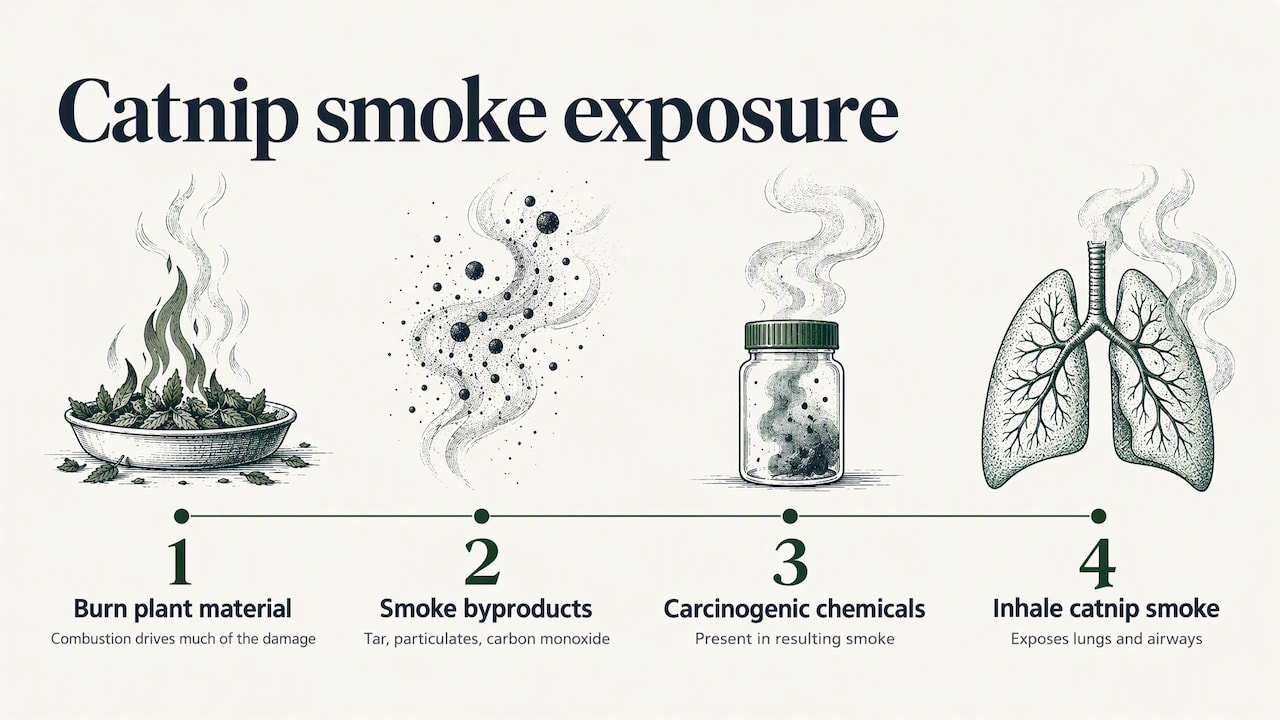
That principle applies directly to catnip. Smoking dried catnip leaves exposes your lungs and airways to the same categories of byproducts you’d get from any smoked plant material.
Smoke can irritate the throat and airways. If you experience breathing symptoms after inhaling smoke, seek medical advice.
Smoke exposure may be especially concerning for people with asthma or cardiovascular disease, and pregnant people. Consider avoiding it and discussing concerns with a clinician. There are no long-term human-inhalation studies specific to catnip, which means we have no data on what repeated exposure might do over months or years. The absence of that research isn’t neutral: it means the combustion exposure itself, well documented across herbal and tobacco-free cigarettes alike, remains the central and most predictable risk.
Pro Tip: If you’re drawn to the ritual of smoking rather than any specific effect from catnip, a non-combustion option removes the particulate exposure entirely.
Reported effects and side effects in people who smoke catnip
Beyond the respiratory concerns, people who report smoking catnip describe a scattered set of symptoms rather than a consistent experience. These accounts come from informal reports and limited safety summaries rather than structured clinical trials, so there’s no reliable data on how often they occur or at what dose.
Reported effects include headache, vomiting, feeling unwell, and possible impaired judgment, though the available information does not establish how often these occur after smoking catnip.
Because none of this is backed by dose-controlled research, it’s a mistake to treat catnip like a recreational drug with predictable intoxication. What one person experiences says little about what another person will feel, and the range of reported reactions, from mild drowsiness to vomiting, points to inconsistency rather than a reliable effect profile.
If someone has a bad reaction: practical first aid and when to seek emergency help
If you or someone nearby reacts badly after inhaling catnip smoke, a few straightforward steps apply.
- Stop the exposure immediately and move to fresh air.
- Sit down, stay calm, and sip water to ease throat irritation.
- Monitor breathing and watch for symptoms getting worse rather than better.
- Seek urgent medical care for severe breathing difficulty, chest pain that doesn’t ease, fainting, repeated vomiting, severe dizziness, or any sign of an allergic reaction such as swelling or hives.
- Contact local poison control or emergency services if symptoms are severe or you’re unsure how serious they are.
Avoid driving or operating machinery if you feel impaired.
Safer alternatives and non-inhalation uses of catnip
If you’re curious about catnip without taking on combustion risk, oral and topical uses have a longer track record. Catnip tea has a history of traditional oral use, but that does not establish that it is safe for everyone. That said, oral use isn’t automatically risk-free either; it simply avoids the smoke exposure that comes with burning plant material.
For anyone drawn to the ritual of smoking specifically, options that skip combustion particulates altogether tend to be the better fit. Oral CBD preparations and nicotine-free herbal or hemp blends offer that ritual without the tar and carbon monoxide that come with burning dried leaves, a distinction our guide to CBD inhalation risks covers in more depth.
- Catnip tea has a history of traditional oral use, but that does not establish a safe dose.
- Oral and topical preparations avoid smoke particulates entirely.
- Nicotine-free, lab-tested hemp and herbal blends offer a smoking ritual without combustion guesswork.
- Pet-store catnip is a red flag for human inhalation: products made for animals may be treated or blended specifically for pets, not people, as WebMD notes.
Readers wanting a closer look at how different dried herbs behave when burned, and which ones carry fewer unknowns, can also check our overview of herb-smoking effects and risks.
Author perspective: why a cautious approach matters
I wouldn’t experiment with smoking catnip myself. The combustion risks documented by public health authorities are well established, while the human inhalation data on catnip barely exists. If what you’re after is the ritual of smoking rather than a specific effect, lab-tested, nicotine-free alternatives give you that experience without betting on an untested plant. Anyone managing asthma, heart conditions, or pregnancy should talk to a clinician before trying any inhaled herbal product.
— Adam
Nature of Spirit: a nicotine-free alternative worth considering
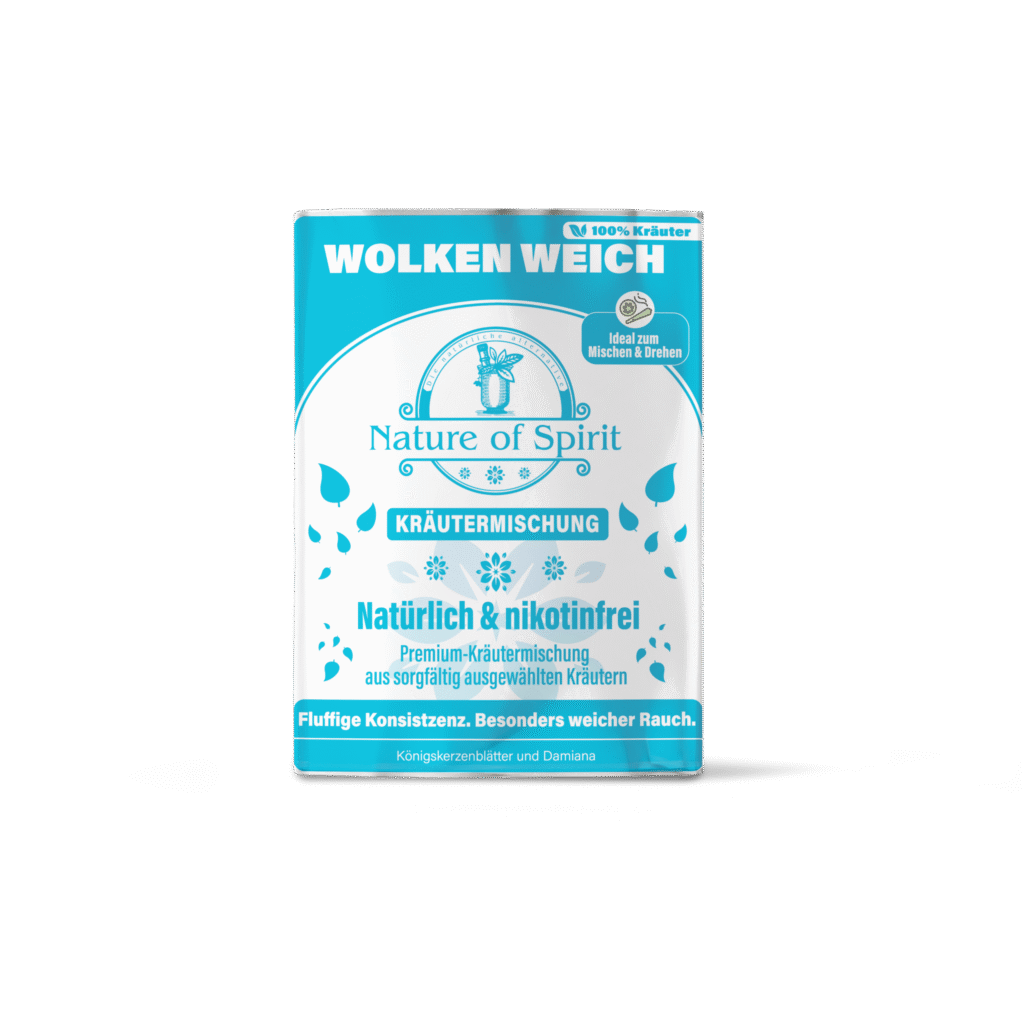
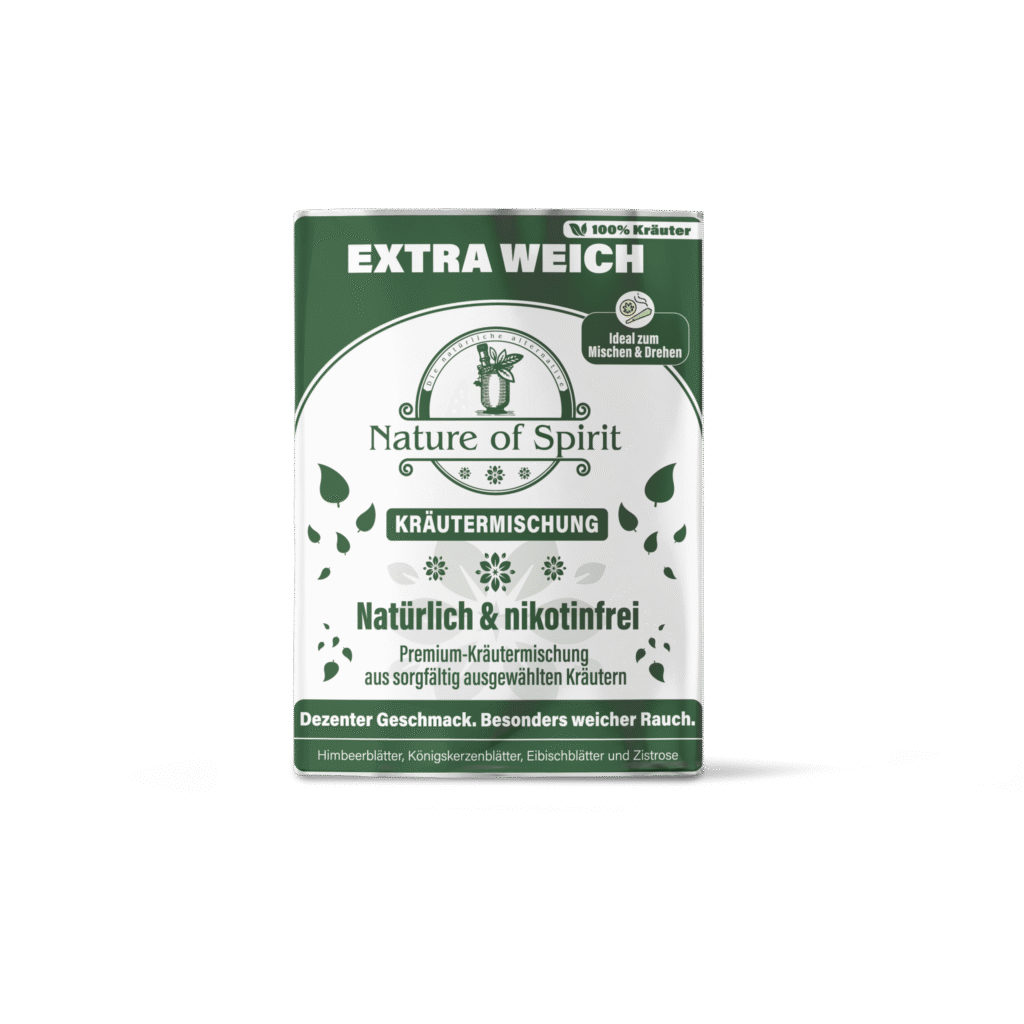
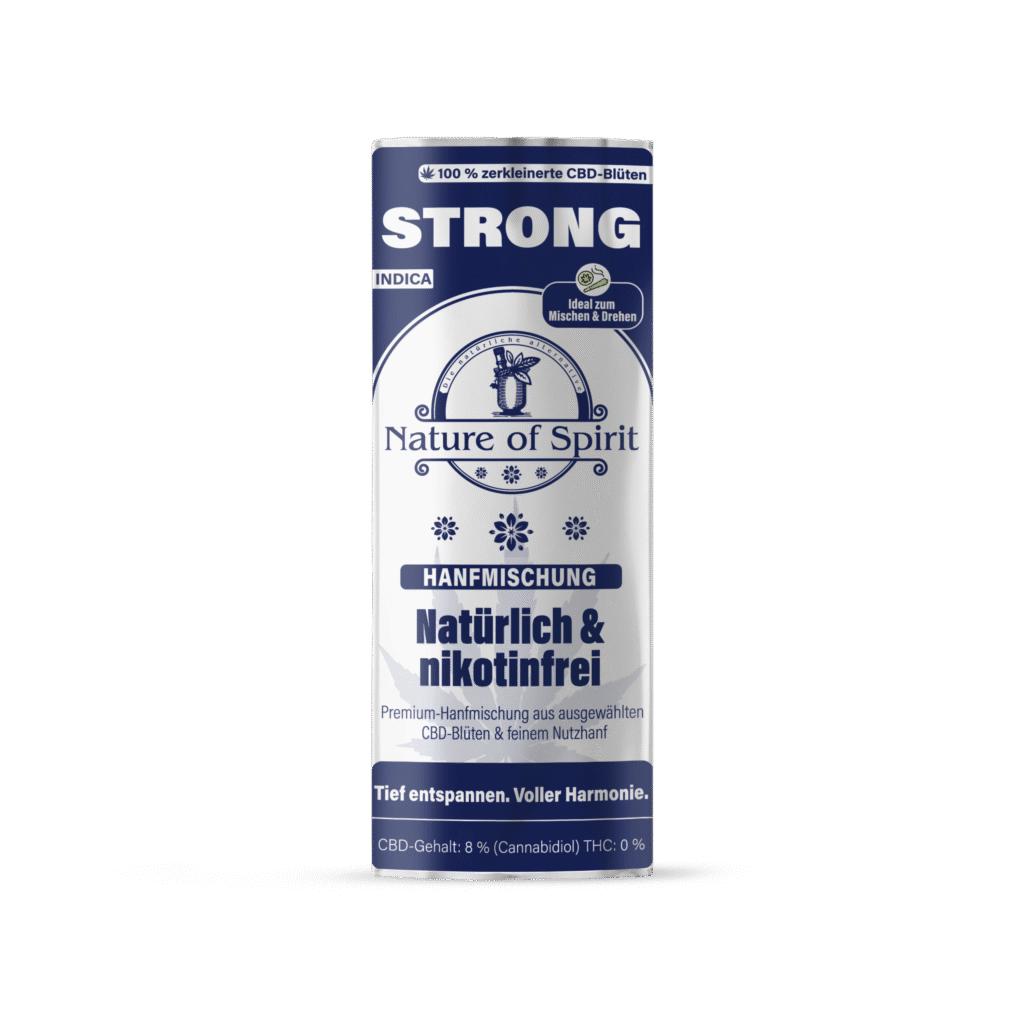
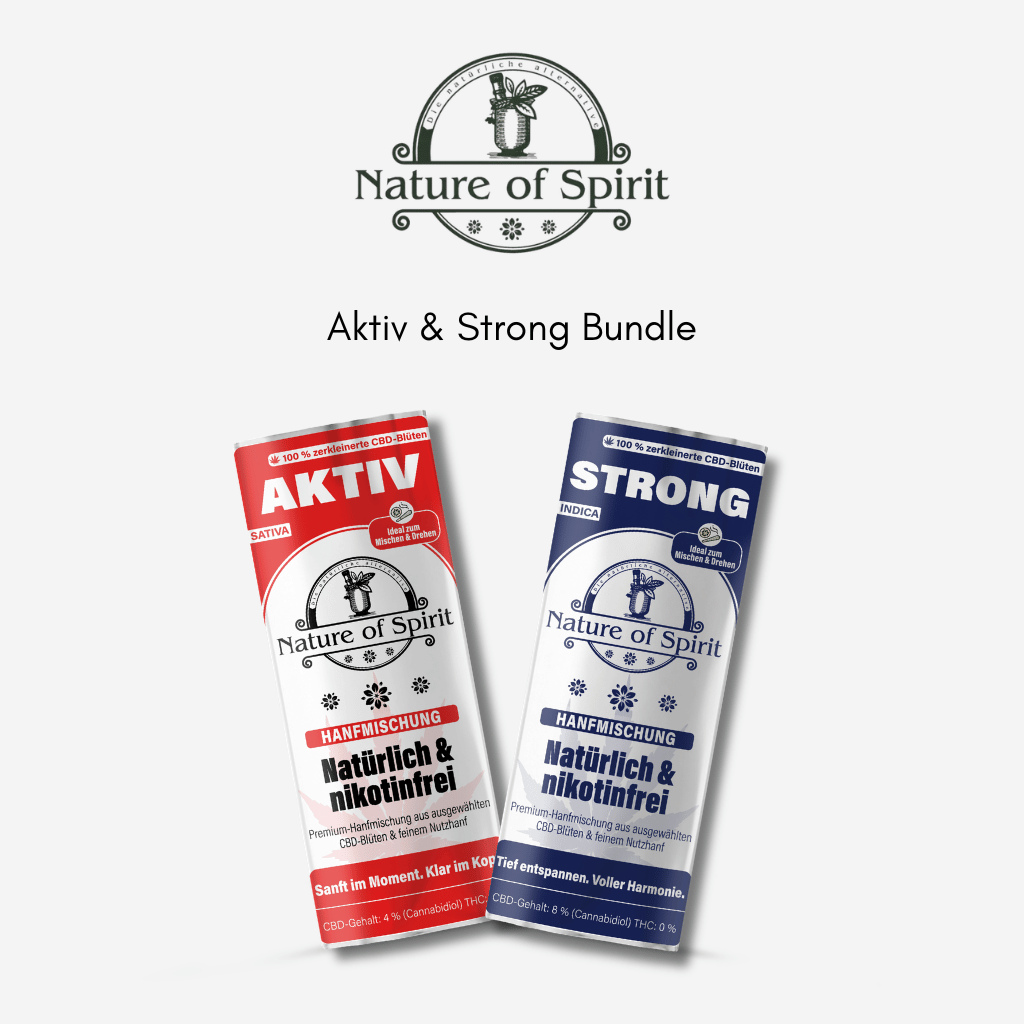
We built our Infusedline and Natureline blends for exactly this situation: wanting the ritual of a smoking break without reaching for pet-store catnip or an untested herb mix. Both lines are presented as alternatives to pet-store catnip, but check the product information to confirm their ingredients and testing.

Our blends are presented as an alternative to catnip. Review the product information and available lab results before deciding whether to use them.
- Infusedline is described as combining hemp with CBD extracts.
- Natureline is described as an herbal blend.
- Check the product information for details about ingredients and testing.
If you want to see what a tested, purpose-built alternative looks like, our Infusedline page has the full lineup and details.
This article is general information, not a substitute for advice from a qualified doctor. Consult a qualified healthcare professional about your own circumstances before acting on anything here.
FAQ
Can smoking catnip do anything?
Some people report mild drowsiness, relaxation, or lightheadedness, but these effects are inconsistent and not backed by controlled human studies. The TRPA1 research found no activation of the human receptor that explains catnip’s effect on insects and cats, which helps explain why human responses vary so much.
Is catnip a smokable herb?
Catnip will burn and can technically be smoked, but WebMD lists inhalation as possibly unsafe, separate from its traditional oral use as tea. Burning any plant material also produces tar and particulates regardless of what herb you’re using.
What will catnip do to a human?
Reported effects range from mild drowsiness and dizziness to headache, nausea, vomiting, and throat irritation, though none of this is backed by dose-controlled research. The compound responsible for catnip’s effect on cats, nepetalactone, did not activate the human receptor tested in a 2021 study, reinforcing that cat and human responses differ.
Does catnip count as a drug?
Catnip isn’t established as a human recreational drug with predictable intoxicating effects; most research instead focuses on its role in attracting cats and repelling insects. If you are considering a nicotine-free alternative, review the ingredients and available testing information for products such as Natureline.
Sources
- Is Any Type of Tobacco Product Safe? | American Cancer Society
- Catnip: Overview, Uses, Side Effects, Precautions, Interactions, Dosing and Reviews
- Behavioral and toxicological studies of cyclopentanoid monoterpenes from Nepeta cataria
- Catnip: Its uses and effects, past and present.